Why We Need Better Ways to Store Our Secrets: A Philosophical, Historical, and Reflective Exploration
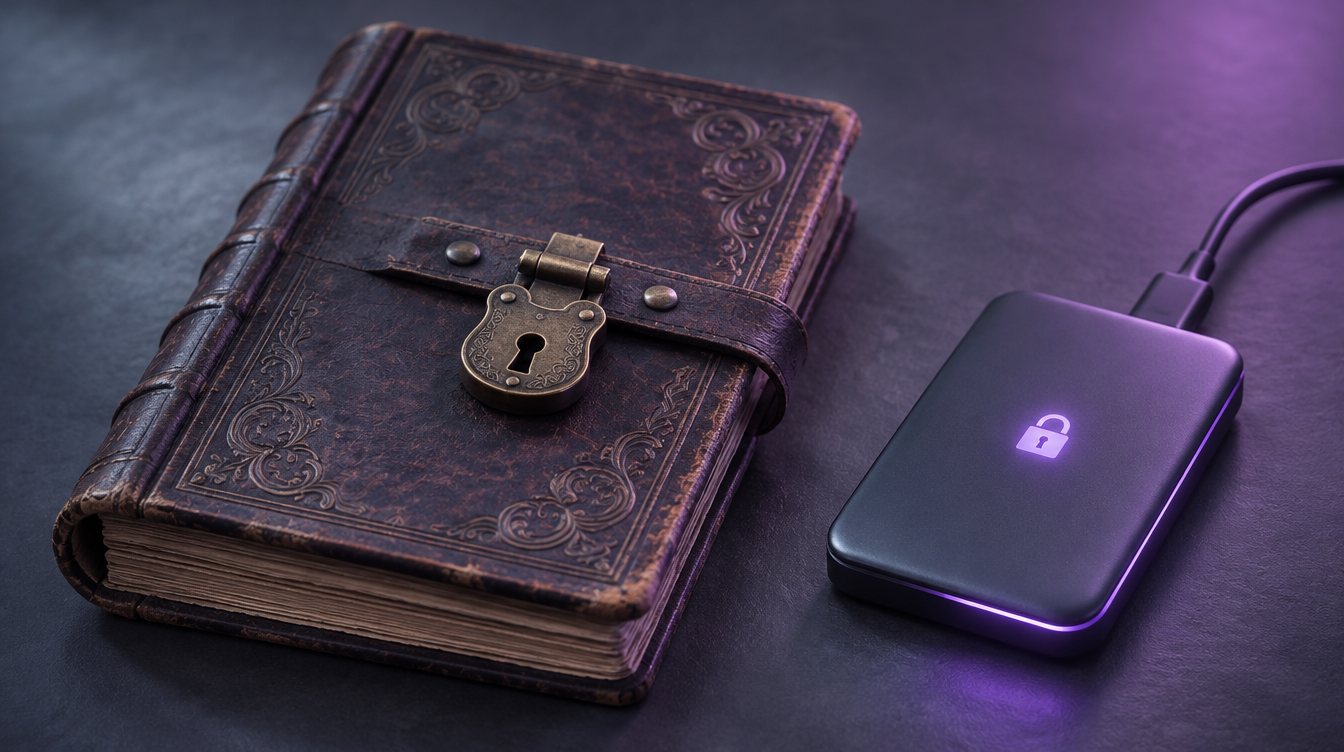
The question of how we store our secrets—whether they be personal thoughts, cryptographic keys, or sensitive data—is not a trivial one. It is a profound inquiry that stretches across the annals of human history, touches the core of our philosophical ideals, and demands reflection on our present condition. Today, tools like UnoLock emerge not merely as technological innovations but as responses to a timeless human need, refracted through the complexities of the digital age. Let us explore this need through a deep philosophical lens, weaving together historical context and reflective analysis to understand why better secret storage is not just desirable but essential.
Historical Context: The Eternal Quest for Secrecy
The protection of secrets has been a driving force in human civilization since its earliest days. In ancient Greece, the scytale—a simple yet ingenious tool—encrypted military messages, ensuring that only those with the right key could decipher them. Julius Caesar employed his cipher to shield his commands from enemy eyes, a practice that underscored secrecy as a pillar of power. These early cryptographic efforts were not mere utilities; they were assertions of control in a world of uncertainty and conflict.
As history unfolded, the methods evolved. The medieval era brought physical vaults and locks to safeguard gold, relics, and parchments—symbols of wealth and knowledge. The Renaissance saw cryptography blossom into an art, reflecting the intricate webs of diplomacy and commerce that defined the age. Each advancement was met with new threats: spies decoding messages, thieves breaching strongholds, and rival powers seeking any advantage. The need to protect secrets was a constant, a thread woven into the fabric of human progress.
The digital age has transformed this need into something both more urgent and more fragile. Our secrets—passwords, financial data, private communications—now reside in bits and bytes, stored in centralized systems that promise convenience but deliver vulnerability. The 2017 Equifax breach exposed the personal details of 147 million people; the 2021 Colonial Pipeline attack disrupted lives across a nation. These events are modern echoes of ancient sieges, reminders that the battle for secrecy persists. History teaches us that as our tools advance, so do the risks, compelling us to seek ever-better ways to guard what matters most.
Philosophical Lens: Autonomy and the Right to Our Secrets
Beyond the practical lies a deeper question: Who should hold dominion over our secrets? Philosophically, this is a matter of autonomy—the right to govern oneself—and privacy, its inseparable companion. These ideals, championed by thinkers from John Locke to Michel Foucault, assert that control over one’s own domain, including one’s secrets, is fundamental to human dignity and freedom.
In the digital realm, this autonomy is under threat. Centralized authorities—governments with surveillance mandates, corporations with data-hungry algorithms—wield unprecedented power over our lives. Laws like the U.S. Patriot Act or China’s National Intelligence Law grant access to our digital selves, often without our consent. Tech giants harvest our secrets to fuel their empires, turning privacy into a commodity rather than a right. This erosion of control is not just a technological failing; it is a philosophical crisis, a betrayal of the principle that we should be sovereign over our own existence.
Enter UnoLock, a tool that reframes this narrative. Built on a zero-knowledge foundation—where even its creators cannot access your data—it places the keys to your secrets firmly in your hands. This is not just a technical choice but a philosophical stance: a declaration that autonomy matters. Features like DuressDecoy, which protects against coercion, and Plausible Deniability, which shields under pressure, elevate this beyond utility. They affirm that true freedom includes the right to resist, whether against digital hackers or physical threats. In a world where trust in institutions falters, UnoLock offers a radical alternative: trust in oneself, secured by cryptography.
Reflective Analysis: The Fragility of Our Present
Let us pause to reflect on our current state. The digital age has brought wonders—global connectivity, instant access, decentralized wealth—but it has also exposed our fragility. Centralized systems, for all their efficiency, are brittle. A single breach, like the 2013 Yahoo hack compromising 3 billion accounts, can unravel lives. Even decentralized solutions falter: the $140 billion in lost Bitcoin, locked away by forgotten passphrases or misplaced devices, speaks to the limits of our tools.
More troubling is the commodification of our secrets. Surveillance capitalism, as philosopher Shoshana Zuboff terms it, thrives on our data, stripping away agency under the guise of convenience. Governments watch, corporations profit, and we are left disempowered, our secrets no longer ours. This is not just a security issue—it is a loss of self, a surrender of the autonomy that defines us.
UnoLock confronts this fragility head-on. Its decentralized, privacy-first design rejects the centralized model, returning control to the individual. Features like global redundancy and LockoutGuard ensure resilience against loss, while Eyes Only Messaging—a serverless communication tool—keeps conversations beyond reach. Reflecting on this, UnoLock feels less like a product and more like a mirror, asking us: What does it mean to be secure in a world that seeks to know us too well?
UnoLock: A Bridge Between Past and Future
UnoLock is not merely a response to today’s challenges; it is a bridge between historical necessity and philosophical aspiration. It echoes the ancient desire to protect what is ours—be it a message on a scytale or a vault of gold—while addressing the digital threats of hacks, surveillance, and coercion. Its LegacyLink feature, ensuring secrets pass securely to heirs, speaks to a timeless concern for legacy, made urgent by the $140 billion in unclaimed digital assets. Its encryption and user-chosen storage embody the modern need for resilience in a decentralized world.
Philosophically, UnoLock is a statement. It asserts that we can reclaim our sovereignty, that we need not cede our secrets to fragile systems or overreaching powers. It invites us to imagine a future where autonomy is not a privilege but a given, where privacy is not negotiated but asserted.
Conclusion: A Timeless Need, A Modern Imperative
The need for better ways to store our secrets is as old as humanity itself, a constant through shifting eras. From ancient ciphers to medieval vaults to today’s digital keys, it reflects our enduring quest for control, security, and selfhood. Yet, in this age of breaches and surveillance, that need has never been more pressing. UnoLock stands as both a practical solution and a philosophical call—a tool that safeguards our secrets while challenging us to reclaim our autonomy.
In the end, this is not just about technology. It is about who we are and who we wish to be: free individuals in a fragile world, holding the keys to our own secrets, as we always have, as we always must. UnoLock is not just a necessity—it is a reflection of our deepest values, made manifest for the challenges of our time.