UnoLock: A Sovereign Digital Vault Reflecting Our Quest for Control, Security, and Selfhood
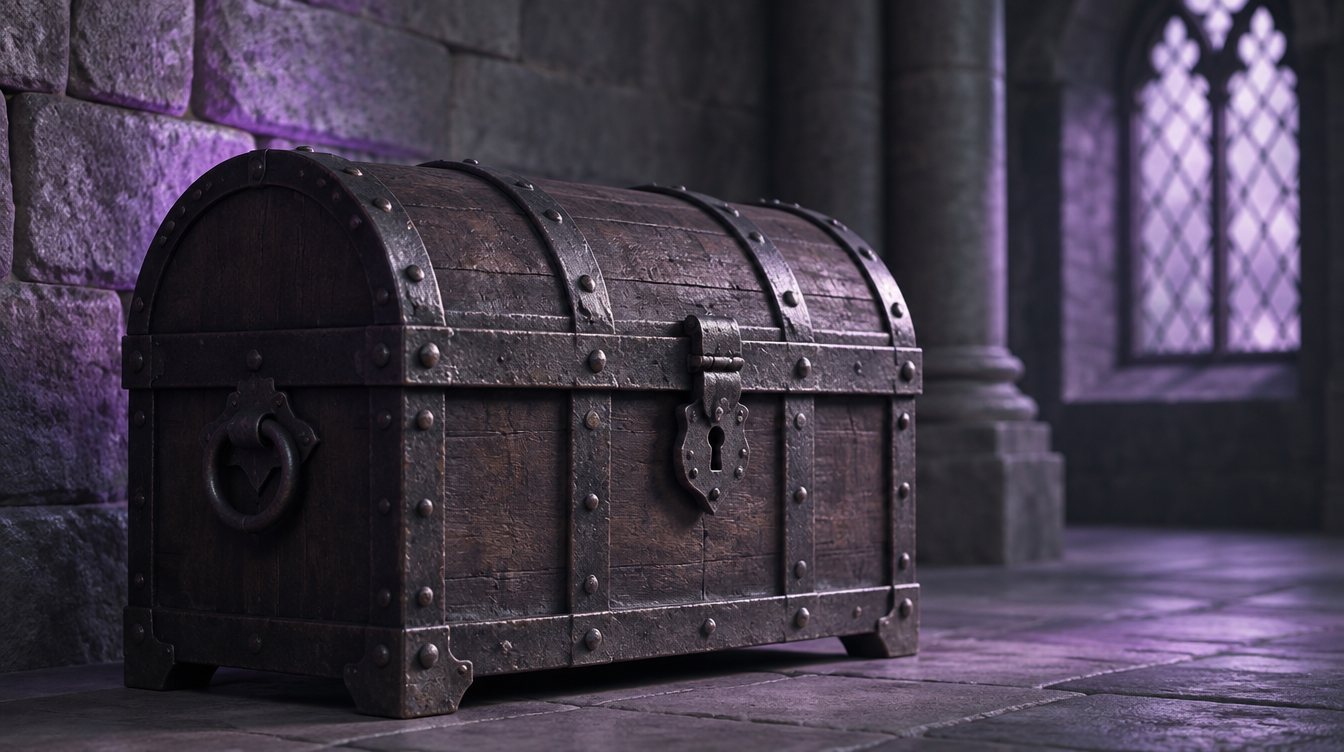
In the shadow of a medieval castle, a lord locks his gold in a chest, the key hidden where only he can find it. This image, timeless in its simplicity, captures an enduring human truth: we have always sought to protect what is ours. From the earliest days of civilization, we have built walls, forged locks, and devised ciphers to safeguard our treasures—be they gold, relics, or secrets. Today, in a world of bits and bytes, our treasures have transformed. They are no longer physical but digital: cryptographic keys, passwords, financial data, and personal communications. Yet, the need remains the same. UnoLock, a sovereign digital vault, emerges not as a mere tool but as a modern embodiment of this ancient quest for control, security, and selfhood.
Historical Context: The Evolution of Protection
Throughout history, the methods we have used to protect our valuables have evolved alongside the threats we face. In ancient times, physical barriers—stone walls, iron gates—shielded wealth from invaders. The medieval strongbox, secured with a key known only to its owner, symbolized personal sovereignty over one’s possessions. As knowledge became power, cryptography emerged to protect secrets, from Caesar’s cipher to the intricate codes of Renaissance diplomacy. Each era brought new tools to meet new challenges, yet the underlying desire remained: to maintain control over what is ours.
The digital age has intensified this need. Our lives are now woven into the fabric of the internet, where data is both currency and identity. Centralized systems—cloud storage, social platforms, financial institutions—promise convenience but often at the cost of control. Breaches like the 2017 Equifax hack, which exposed the data of 147 million people, or the loss of $140 billion in unclaimed Bitcoin due to forgotten keys, reveal the fragility of these systems. Our digital treasures are vulnerable not only to hackers but to the very entities we entrust with their care. In this landscape, UnoLock stands as a digital strongbox, fortified not with iron but with cryptography, ensuring that only we hold the key.
Control: Sovereignty in the Digital Realm
A sovereign digital vault like UnoLock is defined by its promise of absolute control. It is a secure space where you store your most critical digital assets—cryptocurrency keys, passwords, sensitive documents—under your sole authority. Unlike traditional systems, where service providers retain access or impose restrictions, UnoLock’s zero-knowledge architecture ensures that no one else, not even its creators, can breach your domain. This is sovereignty in its purest form: you are the ruler of your digital kingdom.
This control manifests in practical features. LockoutGuard prevents you from being locked out of your own vault, addressing a common pitfall of absolute ownership. User-chosen storage frees you from reliance on a single provider, allowing you to distribute your data across locations of your choosing. These mechanisms reflect humanity’s age-old desire to dictate the terms of our possessions’ safety, adapted to the complexities of the digital world. Just as a medieval lord decided who could approach his treasury, UnoLock empowers you to decide who accesses what, when, and how.
Security: Fortifying the Modern Fortress
Security, the second pillar of this quest, has always been about protection against threats. Historically, we built walls to repel invaders, locks to thwart thieves, and safes to preserve wealth. In the digital realm, the threats are more insidious—hackers, surveillance, data breaches—and the stakes are higher. UnoLock meets these challenges with modern equivalents: end-to-end encryption ensures that your data remains unreadable to outsiders, global redundancy protects against loss by duplicating it across secure locations, and DuressDecoy lets a safeword PIN open your Safe with its sensitive Spaces hidden under coercion, safeguarding your true assets.
This layered security mirrors the resilience of ancient fortifications while addressing uniquely digital risks. It protects not just against virtual attacks but physical and legal overreach, such as forced disclosure or government subpoenas. By incorporating Plausible Deniability, UnoLock allows you to permanently delete the Spaces you marked as sensitive, ensuring that your fortress holds even under pressure. This is security not as a passive shield but as an active assertion of autonomy, a digital evolution of the locks and ciphers that guarded our ancestors’ secrets.
Selfhood: Preserving Identity in a Digital Age
At its deepest level, UnoLock reflects our quest for selfhood. Our digital assets—passwords, financial records, private messages—are more than data; they are extensions of ourselves. They embody our choices, our relationships, our identities. When these are compromised, as in the countless breaches that expose personal lives to the world, we lose a part of who we are. The philosopher Michel Foucault warned of surveillance’s power to erode the private self, a prophecy realized in today’s era of mass data collection and algorithmic profiling.
UnoLock counters this erosion with features that preserve the self. The Master Keypair Generator lets you create uncompromised cryptographic keys, the bedrock of your digital identity. LegacyLink ensures that your digital self—your assets, your memories—can be securely passed to heirs, extending your presence beyond your lifetime. Eyes Only Messaging, a serverless communication tool, keeps your conversations truly private, free from interception. These are not just technical safeguards; they are declarations that your selfhood remains yours alone, inviolable even in the vast, impersonal expanse of the digital world.
A Modern Bastion of Autonomy
UnoLock is more than a vault—it is a declaration of independence in the digital realm. In a world where centralized systems falter under breaches and surveillance, where convenience often trades away privacy, UnoLock offers a different path. It reminds us that we need not surrender our autonomy to participate in the digital age. By giving us control over our digital selves, it affirms our right to selfhood, to be sovereigns in a landscape that too often casts us as subjects.
This sovereignty comes with responsibility. Absolute control risks permanent loss if a password is forgotten, a challenge UnoLock mitigates with global redundancy and LockoutGuard. Critics might argue that centralized systems are more convenient, but convenience has proven costly—data scandals and privacy violations underscore the trade-off. UnoLock strikes a balance, offering the security of a sovereign vault with the usability needed for everyday life, proving that autonomy need not sacrifice practicality.
Conclusion: An Enduring Quest, A Modern Imperative
The need to protect our secrets is as old as humanity itself. From the medieval lord’s strongbox to the cryptographic vaults of today, it reflects our enduring quest for control, security, and selfhood. UnoLock is both a continuation of this quest and a response to the unique challenges of our time. It is a tool that not only safeguards our digital treasures but also reasserts our autonomy in an age of uncertainty.
In the end, UnoLock is not just about technology—it is about who we are and who we choose to be. It invites us to reclaim our sovereignty, to assert that in the digital realm, as in life, we remain the masters of our fate. By securing our secrets, we secure our selfhood, ensuring that in a world that seeks to know us too well, we remain, always, our own.