The Death of Passwords: Why FIDO2 Is the Authentication Revolution We've Been Waiting For
Passwords are dying a slow, painful death. Despite decades of security education, people still use "password123" and reuse the same credentials across dozens of accounts. Data breaches expose millions of passwords annually. Phishing attacks trick users into entering credentials on fake websites. Two-factor authentication helps, but SMS codes can be intercepted and authenticator apps can be compromised.
The fundamental problem isn't user behavior—it's the password system itself. Passwords are shared secrets that must be transmitted, stored, and verified by remote servers. This creates inherent vulnerabilities that no amount of user education can fix. We need a completely different approach to authentication, and that approach is FIDO2.
FIDO2 represents the most significant advancement in authentication since passwords were invented. Instead of shared secrets, FIDO2 uses cryptographic key pairs that never leave your device. Instead of something you know, it relies on something you have (your device) and something you are (biometric verification). Instead of trusting servers with credentials, it creates mathematical proofs that verify identity without exposing secrets.
How FIDO2 Works
Traditional password authentication requires users to send their credentials to servers, where they're compared against stored passwords. This means passwords must be transmitted over networks and stored in databases—creating multiple opportunities for interception or theft.
FIDO2 flips this model entirely. During registration, your device generates a unique cryptographic key pair for each account. The private key stays securely on your device and never leaves it. The public key is sent to the server and associated with your account.
When you want to log in, the server sends a cryptographic challenge to your device. Your device uses the private key to create a digital signature that proves you possess the correct key, without ever revealing the key itself. The server verifies this signature using the public key it stored during registration.
This process provides mathematical proof of identity without transmitting any secrets. Even if attackers compromise the server and steal all stored data, they cannot use that information to impersonate users because they don't have access to the private keys stored on user devices.
UnoLock's Implementation
UnoLock has built FIDO2 authentication into the core of their platform, making cryptographic security accessible to everyday users. Instead of complex key management, users simply use their fingerprint, face recognition, or hardware security key to authenticate.
The process feels familiar—touch your fingerprint sensor or look at your phone's camera—but the underlying security is revolutionary. Your biometric data never leaves your device and is never sent to UnoLock's servers. Instead, biometric verification unlocks the cryptographic keys stored securely on your device.
This approach provides multiple layers of security. Attackers would need physical access to your specific device, knowledge of your biometric data, and the ability to bypass hardware security measures. Even then, they could only access your UnoLock vault, not your authentication credentials for other services.
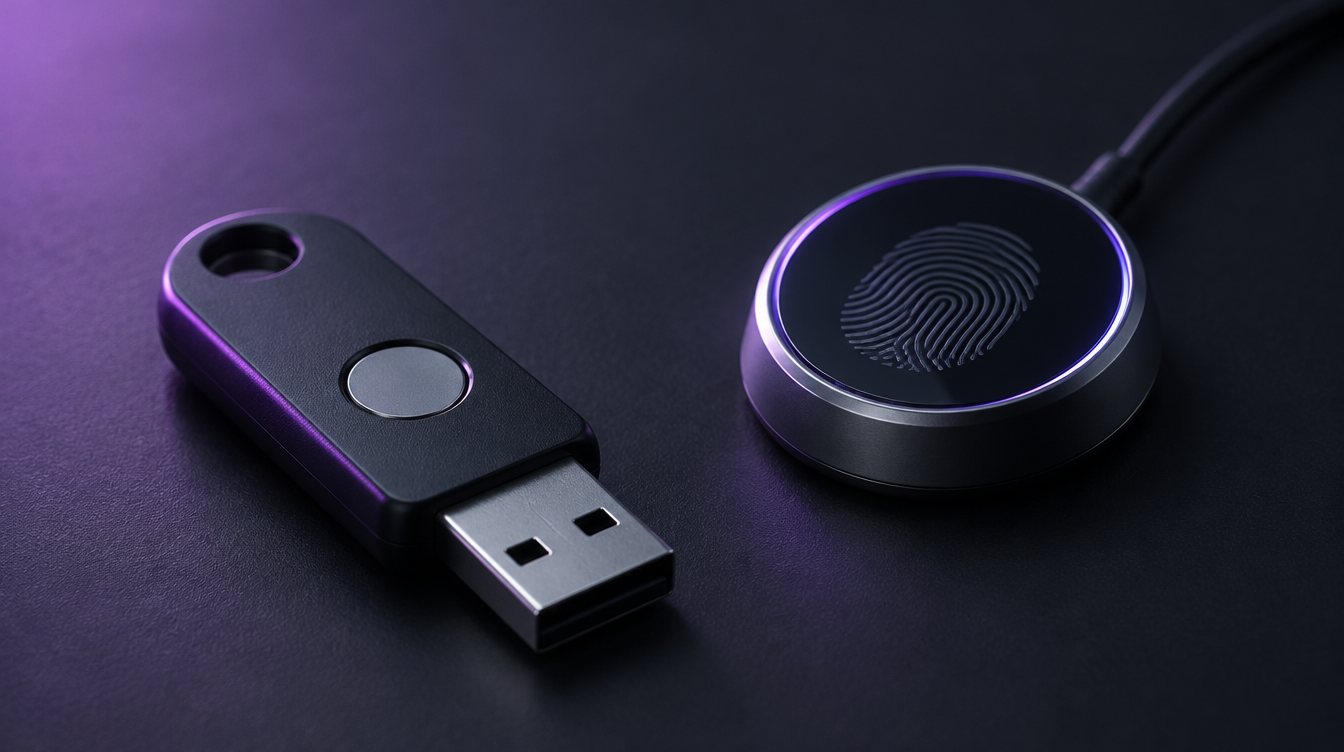
The platform also supports hardware security keys like YubiKeys for users who prefer physical authentication tokens. These devices provide the same cryptographic security while being independent of any particular device or biometric system.
Beyond Security: The User Experience Revolution
FIDO2 doesn't just improve security—it dramatically improves user experience. Users never need to remember, type, or manage passwords. Authentication becomes as simple as touching a fingerprint sensor or inserting a hardware key.
This simplicity eliminates many common user errors. Users can't accidentally enter credentials on phishing sites because there are no credentials to enter. They can't reuse passwords across services because there are no passwords to reuse. They can't choose weak passwords because the system generates cryptographically strong keys automatically.
The technology also enables seamless multi-device authentication. Once registered on one device, users can easily add additional devices without compromising security. Each device generates its own unique key pair, so losing one device doesn't compromise others.
Cross-platform compatibility means FIDO2 authentication works consistently across different operating systems and browsers. The same security key or biometric authentication that works on your phone also works on your laptop or tablet.
Industry Adoption and Ecosystem Growth
Major technology companies have embraced FIDO2 as the future of authentication. Google, Microsoft, Apple, and others have integrated FIDO2 support into their platforms and are actively promoting passwordless authentication.
Browser support is now universal, with Chrome, Firefox, Safari, and Edge all implementing FIDO2 specifications. Operating systems provide native support for FIDO2 authentication, making it easy for applications to integrate passwordless login.
The growing ecosystem of FIDO2-compatible services means users can increasingly rely on the same authentication method across multiple platforms. This creates positive network effects where each new service that adopts FIDO2 makes the technology more valuable for users.
Hardware manufacturers have responded by integrating FIDO2 support into smartphones, laptops, and dedicated security keys. Modern devices include secure elements and biometric sensors designed specifically for FIDO2 authentication.
Addressing Common Concerns
Critics often raise concerns about FIDO2 adoption that reflect misunderstandings about how the technology works. The most common worry is device loss—what happens if you lose your phone or security key?
FIDO2 systems address this through multiple registration and recovery mechanisms. Users typically register multiple devices during setup, so losing one device doesn't lock them out of their accounts. Recovery processes use additional registered devices or backup methods to restore access.
Another concern involves privacy and biometric data. FIDO2 authentication keeps biometric data local to devices and never transmits it to servers. Even device manufacturers typically can't access biometric templates, which are stored in secure hardware enclaves.
Compatibility with existing systems also worries some users. While FIDO2 requires service providers to implement support, the transition can be gradual. Many platforms support both traditional passwords and FIDO2 authentication during migration periods.
The Business Case for FIDO2
Organizations implementing FIDO2 authentication see immediate benefits beyond improved security. Password-related help desk costs can drop dramatically when users no longer forget or need to reset passwords. Data breach risks decline when there are no passwords to steal.
Compliance becomes easier when authentication systems meet or exceed regulatory requirements for strong authentication. Customer trust increases when businesses can demonstrate tangible security improvements.
For consumer services, FIDO2 can provide competitive advantages. Users who experience passwordless authentication often find it difficult to return to traditional password systems. This can drive customer loyalty and differentiate services in competitive markets.
Looking Forward
FIDO2 represents more than just an authentication upgrade—it's a fundamental shift toward user-controlled security. Instead of depending on service providers to protect shared secrets, users maintain control over their own authentication credentials.
This shift has implications beyond individual login experiences. As more services adopt FIDO2, we're moving toward a world where users can authenticate to any service without sharing secrets or depending on third-party identity providers.
The technology also enables new forms of digital identity that don't require central authorities. Users could potentially prove their identity across services and platforms while maintaining privacy and control over their personal information.
Platforms like UnoLock are demonstrating that FIDO2 authentication can be both more secure and more user-friendly than traditional passwords. As this becomes clear to both users and service providers, we're likely to see accelerated adoption across the digital ecosystem.
The password era is ending not with regulatory mandates or security breaches, but with a better alternative that users actually prefer. FIDO2 doesn't just solve password security problems—it eliminates passwords entirely, creating a foundation for the next generation of digital authentication.