Beyond the Click: UnoLock CybVault's PIN System and the Fortification of Secure Storage Against Ubiquitous Threats
In the pantheon of digital security, the sanctity of stored data—cryptographic keys, passwords, sensitive documents—relies precariously on the mechanisms guarding access. Traditional secure storage solutions, from password managers to cloud vaults, harbor a litany of weaknesses: phishing exploits, man-in-the-middle (MITM) attacks, vendor backdoors, and platform-specific fragility. A 2024 Verizon Data Breach Investigations Report revealed that 63% of breaches involved stolen credentials, with phishing accounting for 29% and MITM attacks a growing 12%. Paper notebooks and unencrypted notes exacerbate this, but even "secure" systems falter—vendor access exposes data, clickable interfaces invite observation, and email-based recovery opens phishing floodgates. UnoLock CybVault redefines this landscape with a PIN system immune to clicking observation, FIDO2 passkeys with biometric authentication, and Absolute Anonymity, underpinned by a device-agnostic, OS-agnostic architecture. This article dissects these pervasive vulnerabilities, illustrates their real-world brutality through breaches, and elucidates how UnoLock’s innovative design fortifies both data and custodian against compromise.
The Fragile State of Secure Storage: A Taxonomy of Weaknesses
Secure storage, ostensibly a bulwark for critical data, is riddled with systemic flaws exploited by adversaries:
- Phishing Vulnerability: Password managers and cloud vaults often rely on clickable logins or email recovery, prime vectors for phishing. A 2023 Google Security Report found that 65% of users had faced phishing attempts, with 15% succumbing—credentials stolen via fake login pages or email links.
Man-in-the-Middle Exploitation: Clickable interfaces—buttons, touch inputs—leak interactions to MITM attackers via keyloggers or screen overlays. IBM’s 2024 Cost of a Data Breach report notes a 12% rise in MITM breaches, averaging $4.8 million per incident.
Vendor Access: Many platforms retain backdoor access or metadata, undermining user control. The 2022 LastPass breach exposed encrypted vaults to vendor-held keys, compromising trust—43% of affected users lost data or funds.
Device and OS Dependency: Storage tied to specific devices or operating systems falters when hardware fails or software updates disrupt compatibility. Keeper Security’s 2023 survey found 28% of users lost access due to device-specific lockouts.
Email Exposure: Recovery via email—a common fallback—invites interception; Chainalysis’s 2024 crypto theft report attributes $300 million in losses to email-based credential leaks.
These weaknesses converge on a brutal truth: traditional storage is a house of cards, toppled by phishing lures, intercepted clicks, vendor overreach, or platform fragility. The ramifications are dire—financial devastation, identity theft, and data loss—leaving custodians exposed.
Real-World Scenarios: The Brutality of Compromise
The consequences of these vulnerabilities manifest in documented breaches, their brutality a stark warning:
- The Phishing Victim: In 2023, a UK cryptocurrency trader clicked a phishing email masquerading as his wallet provider, entering his 24-word seed phrase on a fake page. Within hours, his 20 BTC wallet ($1.2 million) was drained—a clickable login, a stolen fortune.
The MITM Casualty: A 2024 California freelancer’s unencrypted note app on her phone synced to a cloud vulnerable to a MITM attack via public Wi-Fi. Her client passwords—clicked into a compromised interface—unlocked $80,000 in project accounts, stolen in minutes.
The Vendor Breach: A 2022 executive’s cloud vault, touted as secure, fell to a vendor insider breach—raw passwords and contracts exposed via backdoor access cost his firm $2.5 million in lawsuits and lost contracts.
The Device Lockout: A 2025 Canadian family lost access to a $500,000 crypto inheritance when an iOS-specific wallet app failed after an update; the vendor’s email recovery, phished, locked them out permanently.
These cases—from Chainalysis, Verizon, and news archives—reveal a spectrum of loss: $1.2 million in crypto, $2.5 million in damages, familial legacies severed. The brutality lies in exposure’s breadth—clickable interfaces observed, emails intercepted, vendors compromised, devices failing—leaving custodians defenseless against a relentless threat landscape.
UnoLock CybVault: A Paradigm of Protection
UnoLock CybVault reimagines secure storage, addressing these weaknesses with a PIN system, FIDO2 passkeys, biometric authentication, Absolute Anonymity, and a device-agnostic, OS-agnostic design. Its architecture transcends traditional vulnerabilities, protecting both data and custodians:
Non-Clickable PIN System: Thwarting Observation
UnoLock’s PIN system eschews clickable interfaces:
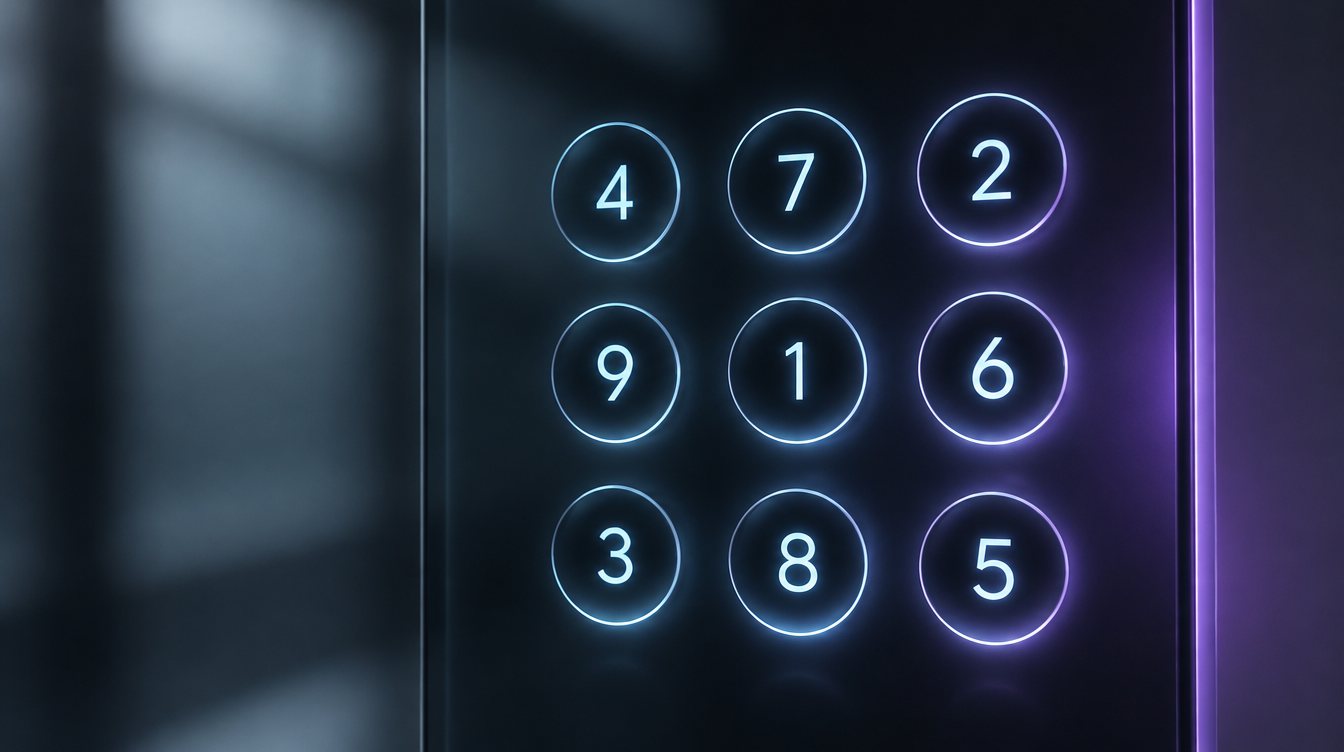
- Randomized Display: Each login presents a shuffled numeric grid, entered via mouse or touch gestures—no static buttons to log or overlay.
MITM Immunity: Without clickable inputs, keyloggers and screen scrapers capture nothing—MITM attacks, reliant on interaction observation, falter.
Device Theft Defense: Physical possession yields no access—a stolen device meets a PIN wall, unbreachable without the custodian’s knowledge.
The freelancer’s 2024 MITM breach evaporates—UnoLock’s PIN defies observation, her client accounts secure despite public Wi-Fi.
FIDO2 Passkeys with Biometrics: Anti-Phishing Bastion
FIDO2 passkeys and biometric authentication (all tiers) fortify access:
- Passwordless Security: FIDO2 leverages public-private key pairs, tied to devices via biometrics (fingerprint, face) or hardware tokens (e.g., YubiKey)—no passwords to phish.
Phishing Resistance: Credentials are device-specific and challenge-response based, invalidating fake login pages; the UK trader’s 2023 $1.2 million loss is nullified—his seed phrase stays safe.
Biometric Precision: Local biometric verification (never leaving the device) adds a human layer, unspoofable by email lures.
Absolute Anonymity: No Trace, No Target
UnoLock’s anonymity eradicates identity linkage:
- No PII: No emails, names, or IPs collected—unlike vendor vaults, compromised metadata reveals nothing (LastPass’s 2022 breach contrasts sharply).
Bitcoin Payments: Financial anonymity via cryptocurrency ensures no traceable billing—custodians remain ghosts to attackers.
No Email Recovery: Eliminating email vectors (a $300 million crypto loss driver in 2024) shuts phishing doors—access hinges on FIDO2 and PINs, not inboxes.
The executive’s 2022 vendor breach? UnoLock’s zero-knowledge design leaves no backdoor—data stays his alone.
Device and OS Agnosticism: Universal Resilience
UnoLock’s browser-based, vendor-agnostic architecture transcends platform limits:
- Cross-Platform Access: Runs on any device—Windows, macOS, iOS, Android—via secure web tech, sidestepping OS-specific lockouts (the Canadian family’s 2025 $500,000 loss avoided).
End-to-End Encryption: AES-256 GCM encrypts data client-side across devices, synced securely without vendor reliance—device failure doesn’t sever access.
LockoutGuard: Multi-device recovery (up to 10 access keys per Safe) via encrypted QR codes or passphrases ensures continuity—platform agnosticism meets resilience.
Real-World Redemption: Scenarios Reimagined
Revisit the breaches with UnoLock:
- Phishing Victim: FIDO2 biometrics shrugs off the fake page—his 20 BTC stays locked, untouchable by email lures.
MITM Casualty: The click-based PIN foils Wi-Fi snoops—her client passwords, unclickable, remain hers; $80,000 intact.
Vendor Breach: UnoLock’s anonymity and E2EE defy insider access—$2.5 million in contracts safe, no backdoor to exploit.
Device Lockout: UnoLock syncs across devices; LockoutGuard restores the family’s $500,000—no OS trap, no loss.
In each, UnoLock’s PIN, FIDO2, anonymity, and agnosticism dismantle traditional weaknesses—custodians endure where others falter.
Implications and Reflection
The majority’s reliance on paper notebooks and unencrypted notes—or even "secure" clickable vaults—exposes a brutal calculus: phishing, MITM, vendor breaches, and device lockouts reap billions in losses annually—Verizon’s $4.5 million breach average, Chainalysis’s $300 million email toll. The ramifications—financial ruin, identity theft, severed legacies—cascade when raw credentials are compromised or stolen. UnoLock CybVault counters this with a fortress unassailable by observation, phishing, or platform failure: its non-clickable PIN thwarts MITM, FIDO2 biometrics block phishing, Absolute Anonymity blinds vendors, and device-agnostic design defies lockouts. From short text essentials to large file archives, it scales protection, while LockoutGuard and LegacyLink ensure continuity—custodians remain sovereign, not victims.
UnoLock redefines secure storage as a bulwark for both data and its keepers, a resilient answer to a world where a click or email can undo everything. Its adoption demands a shift—from fragile habits to fortified intent—but offers a sanctuary where compromise yields nothing but frustration to adversaries.