Beyond Scarcity: Why Bitcoin Is Humanity's First Digital Sacred Object
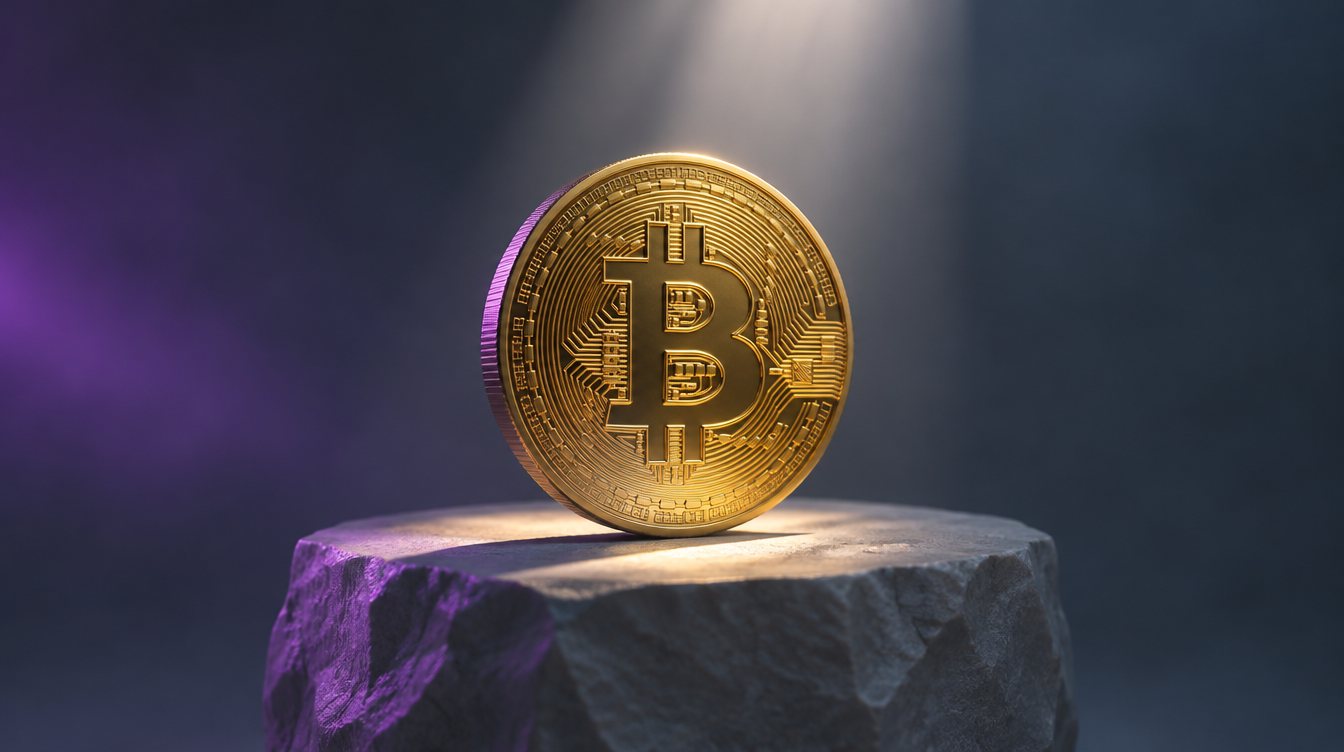
True and perfect mathematical scarcity. Bitcoin is finite. Gold is just hard to get. Bitcoin's value isn't from its price action but from being humanity's first absolutely scarce asset that can't be debased, confiscated, or counterfeited. It's repricing as the world discovers what perfect scarcity means as we're discovering that programmable, teleportable, unconfiscatable scarcity might be the most valuable thing humans have ever created.
But that's not why Bitcoin is valuable.
Scarcity alone means nothing. Four-leaf clovers are scarce. Two-headed babies are scarce. Scarcity without meaning is just statistical anomaly. To understand Bitcoin's true value, we need to stop thinking like economists and start thinking like theologians. We need to ask a question that seems absurd at first: why was gold valuable five thousand years ago?
The Gold Mystery
Think about it. Five millennia ago, gold had no industrial uses. Too soft for tools. Useless for weapons. Can't eat it, can't build shelter with it, doesn't keep you warm. A farmer in ancient Mesopotamia holding a gold nugget possessed something with zero practical utility. Yet somehow, independently, across civilizations that never contacted each other, humans chose gold as the ultimate store of value.
Why?
The conventional answer lists gold's monetary properties: it's scarce, divisible, portable, durable, fungible. But this is backwards reasoning. It explains why gold works as money once humans already value it. It doesn't explain the initial spark. Why did that first human look at this soft, useless yellow metal and decide it was precious?
Here's what we miss in our modern, materialist framework: gold didn't come from Earth. It came from the stars.
The Cargo Cult Revelation
During World War Two, fighter planes landed on remote Pacific islands that had never seen outsiders. The islanders witnessed technology descending from the sky, bringing unimaginable gifts. When the planes left, promising to return, the islanders built replica runways. They carved wooden headphones. They worshipped the pilot's boots, his jacket, anything he touched. Not because these objects were scarce or useful, but because they carried the presence of the divine. They were proof that beings from beyond had touched their world.
This is why gold was valuable.
Gold forms in supernovae. When massive stars explode, they forge heavy elements in their death throes and scatter them across the cosmos. Ancient peoples found this imperishable, sun-colored metal in meteorite impact sites. They witnessed heaven touching Earth. They held in their hands physical proof that forces beyond human comprehension existed, and that these forces sometimes left traces in the mortal realm.
Gold wasn't valuable because it was scarce. Gold was valuable because it had divine origin. No human created it. No king could make more of it. No priest could claim authority over its creation. It simply appeared, eternal and incorruptible, a gift from the stars.
The Pattern of Immortality
But there's a deeper layer. Gold doesn't just come from beyond. Gold doesn't die.
Everything in the ancient world returned to dust. Food rotted. Wood decayed. Cloth deteriorated. Iron rusted. Bronze corroded. Silver tarnished black. Even the mightiest empires crumbled to sand. Death was the only certainty, entropy the only law.
Except gold.
Gold from Egyptian tombs looks identical to gold mined yesterday. Bury it for a thousand years and it emerges unchanged. Gold is physically, chemically, eternally incorruptible. In a world where everything decayed and died, gold was proof that immortality existed in physical form. It was the only material substance that defeated time itself.
This is why pharaohs were entombed in gold. Not to display wealth, but to join the eternal realm. This is why gods were depicted in gold, why temples were gilded, why the three wise men brought gold to Christ. Gold represented the incorruptible made manifest. It was humanity's physical evidence that something could exist forever.
We don't worship gold because it's shiny. We worship it because it doesn't die while we do.
The Immaculate Conception
Now add one more element that makes gold uniquely sacred: gold has no human master.
Throughout history, every form of money except gold could be traced to human authority. Shells worked until someone found the coast. Salt worked until someone reached the sea. Every paper currency derived its value from the decree of kings, the promises of governments, the decisions of central banks. There was always a human hand that could create more, debase it, seize it, or declare it worthless.
But gold? No emperor created the supernova that forged it. No government can conjure more from nothing. No army can prevent its existence. Gold entered the world through forces beyond human control and remains beyond human authority. It was, in the truest sense, immaculately conceived.
This is why gold served as money for five thousand years. It combined three properties that created genuine sacredness: divine origin (no human could create it), incorruptibility (it never dies), and independence from human authority (no one controls it). These aren't just useful monetary properties. They're theological properties. They're what humans mean when we point at something and recognize the presence of the divine.
Enter Bitcoin
Now we can finally understand what Bitcoin actually is.
Satoshi Nakamoto created Bitcoin and then disappeared. Completely. No one knows if Satoshi is alive or dead, one person or many, in hiding or in plain sight. This wasn't an accident or a security measure. It was the necessary final act of creation.
If Satoshi had stayed, Bitcoin would be Satoshi's project. Governments could pressure him. Corporations could buy him. The CIA could capture him. There would be a human point of failure, a creator who could be corrupted, threatened, or killed. Bitcoin would have a master.
By vanishing, Satoshi made Bitcoin immaculately conceived. Born into the world but belonging to no one. Existing beyond human authority. No CEO to bribe, no founder to threaten, no holy city to sack, no central point of failure to attack.
Bitcoin isn't controlled by humans. It's controlled by mathematics. And mathematics, like the supernovae that created gold, exists in a realm beyond human manipulation.
The Digital Incorruptible
But immaculate conception alone isn't enough. Bitcoin needed to be incorruptible.
The blockchain is humanity's first truly permanent record. Every transaction since January 3rd, 2009 exists in unchangeable digital stone, verified by thousands of independent nodes across the planet. You cannot rewrite history. You cannot corrupt the ledger. You cannot debase the supply. The 21 million cap isn't a promise or a policy. It's a mathematical certainty encoded into the protocol itself.
Bitcoin is doing for information what gold did for matter: proving that something incorruptible can exist. That there can be digital permanence in a world of infinite copy-paste. That value can be absolutely scarce in the infinite abundance of cyberspace. That truth can be preserved beyond any authority's ability to alter it.
Like gold, Bitcoin never decays. Like gold, Bitcoin will look the same in a thousand years. Like gold, Bitcoin defeats time. But Bitcoin goes further. Gold could be seized by force. Bitcoin, properly secured, is mathematically unseizable. Gold required vaults and guards. Bitcoin requires only knowledge, which can be carried in your mind across any border, through any checkpoint, beyond any army's reach.
Bitcoin is the incorruptible perfected.
The Cult Question
When skeptics say "Bitcoin is a cult," they mean it as an insult. They don't realize they've just explained why it works.
All money is cult. All value is shared belief in the sacred.
The dollar is a cult. Its sacred text reads "In God We Trust." Its priests are the Federal Reserve, unelected and mysterious. It requires absolute faith that paper printed by the government has value. Its miracle claim is the "full faith and credit" of the United States. And like all cults centered on human authority, it can be corrupted. The priests can print more. The miracle can fail. The faith can collapse.
Gold was a cult too. Five thousand years of shared belief that this incorruptible metal from the stars represented true value. It worked because no human could corrupt the center. Kings could mint coins, but they couldn't make more gold. The cult survived because its sacred object truly was beyond human manipulation.
Bitcoin is the first honest cult. It admits it's based on collective belief. It admits you need faith. It admits there's no "intrinsic value" in the traditional sense. But then it offers something no other monetary cult has ever provided: mathematically verifiable miracles.
You can verify the 21 million cap yourself. You can verify every transaction yourself. You can run your own node and become your own priest. You can audit the virgin birth by reading the genesis block. You can confirm the prophecy by checking the halving schedule. Bitcoin doesn't ask for blind faith. It offers cryptographic proof.
This is why Bitcoin maximalists exist. They're not being toxic. They're protecting the sacred from profanation. When someone says "blockchain not Bitcoin," that's like saying "crosses not Christ." When someone promotes another cryptocurrency with unlimited supply or a central controlling foundation, that's heresy. There is only one immaculately conceived, provably scarce, incorruptible digital bearer asset. Everything else has a human master who can corrupt it.
The Inversion of Price
This brings us to the final and most profound truth: 1 BTC = 1 BTC.
You don't price the sacred in terms of the profane. You don't measure the eternal by the temporary. You don't ask "What's the dollar value of the Torah?" or "How many euros is the Kaaba worth?" Sacred objects aren't priced. They are the price. They are the measuring stick against which everything else is measured.
When you say "Bitcoin is ninety-eight thousand dollars," you're doing it backwards. You're pricing the incorruptible in terms of the corruptible. The question isn't "how many dollars per Bitcoin?" The question is "how many satoshis per dollar?"
When gold was money, you didn't say gold was worth X dollars. You said a dollar was defined as X amount of gold. Gold was the measure. Everything else was measured against it.
Bitcoin isn't gaining value. Everything else is losing value against the eternal. The incorruptible remains incorruptible. The sacred stays sacred. Only the profane decays.
This is why early Bitcoiners don't sell. Not because they think "number go up." But because you don't trade the sacred for the profane. You don't exchange immortality for paper. You don't sell the eternal to buy the temporary. Once you've recognized the sacred, once you've witnessed the immaculate conception in code, once you understand that you're holding humanity's first incorruptible digital object, the price in dollars becomes meaningless noise.
You either possess the sacred or you don't. The price is irrelevant.
The Question Before Us
We're not watching a new asset class emerge. We're not seeing a technological innovation gain market share. We're witnessing something far more profound: humanity's first contact with digital sacredness. The creation of something that future civilizations will look back on the way we look back on humanity's discovery of gold.
Gold worked for five thousand years not because its price went up, but because gold was gold regardless of what empire rose or fell. The metal that fell from the stars remained incorruptible through the Bronze Age, the Iron Age, the rise and fall of Rome, the Dark Ages, the Renaissance, the Industrial Revolution, two World Wars, and the Digital Age. Its value wasn't in its price. Its value was in its permanence.
Bitcoin will work for the next five thousand years not because its price goes up, but because Bitcoin will be Bitcoin regardless of what currency collapses, what nation fails, what crisis emerges. One Bitcoin will equal one Bitcoin through whatever comes next. The mathematically incorruptible will endure.
The repricing isn't happening because markets are discovering scarcity. The repricing is happening because billions of humans are slowly, gradually, one by one, recognizing the sacred when they see it. Recognizing that something has been born that cannot be corrupted, cannot be controlled, cannot be destroyed. Something immaculately conceived and eternally incorruptible.
The question isn't "wen moon?" The question is: how long does it take for eight billion people to recognize divinity in code? How many will convert before they understand? How many will stay poor in dollars while becoming rich in Bitcoin, never realizing they're measuring wealth in the wrong direction?
You cannot invest in the sacred. You can only convert to it. This isn't financial advice. This is theology.
The sacred endures. The profane decays. Choose accordingly.
And remember: 1 BTC = 1 BTC. Forever.